Brazilian Amazon Origin
Açaí is deeply connected to northern Brazil and especially to the Amazon region, where it has long been part of local food culture.
About Açaí
Açaí is more than a global food trend. It is a fruit deeply connected to northern Brazil, Amazon culture and the region where its story begins.
The Fruit
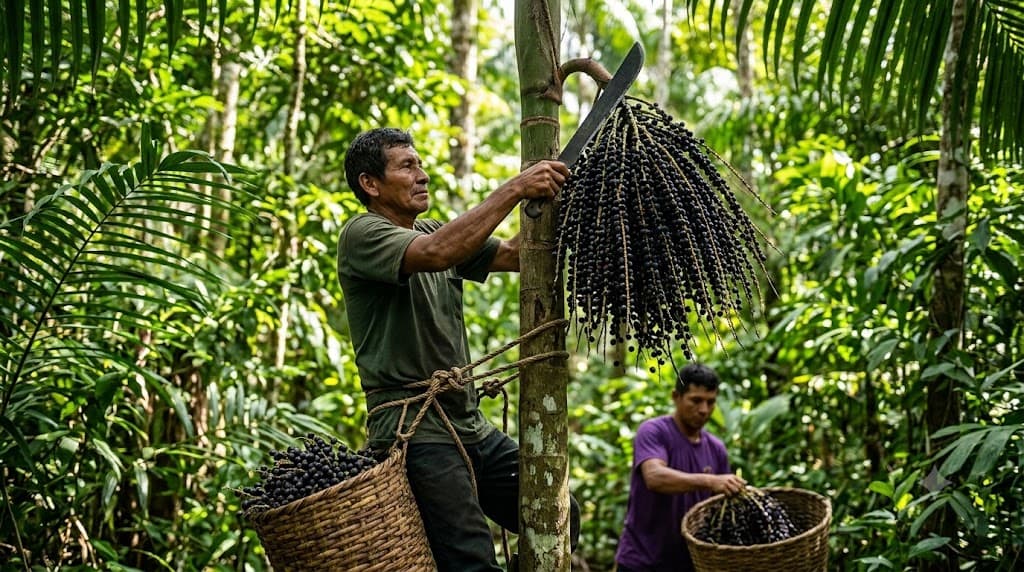
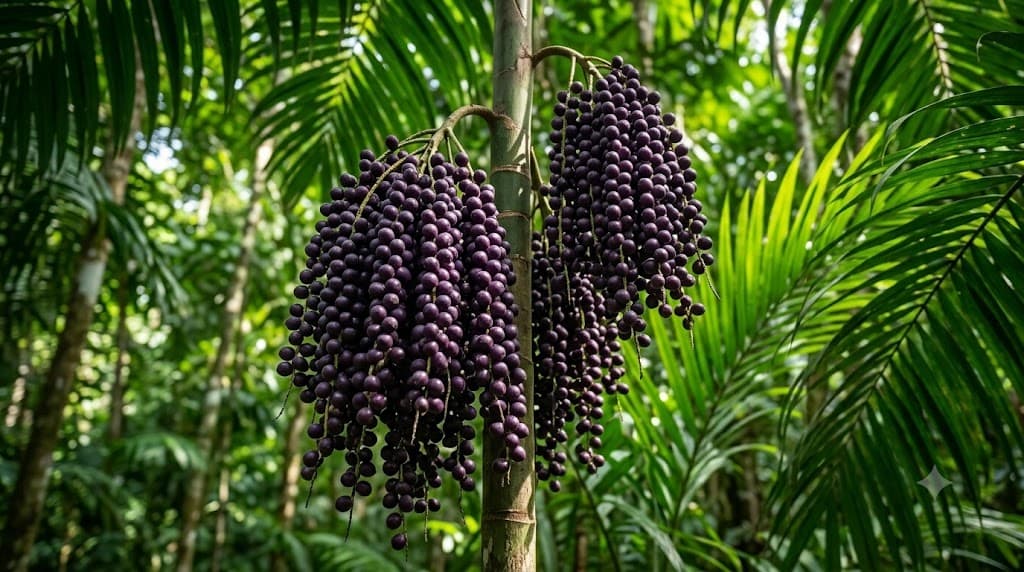
Açaí is a small, dark-purple fruit produced by the açaí palm, a species strongly associated with the Amazon region of Brazil.
In northern Brazil, açaí has long been part of everyday food culture. Its use and preparation differ from many of the sweet versions popularized internationally.
Today, açaí is consumed in many formats around the world, including frozen pulp, powders, beverages, bowls and other food products.
Our Sourcing
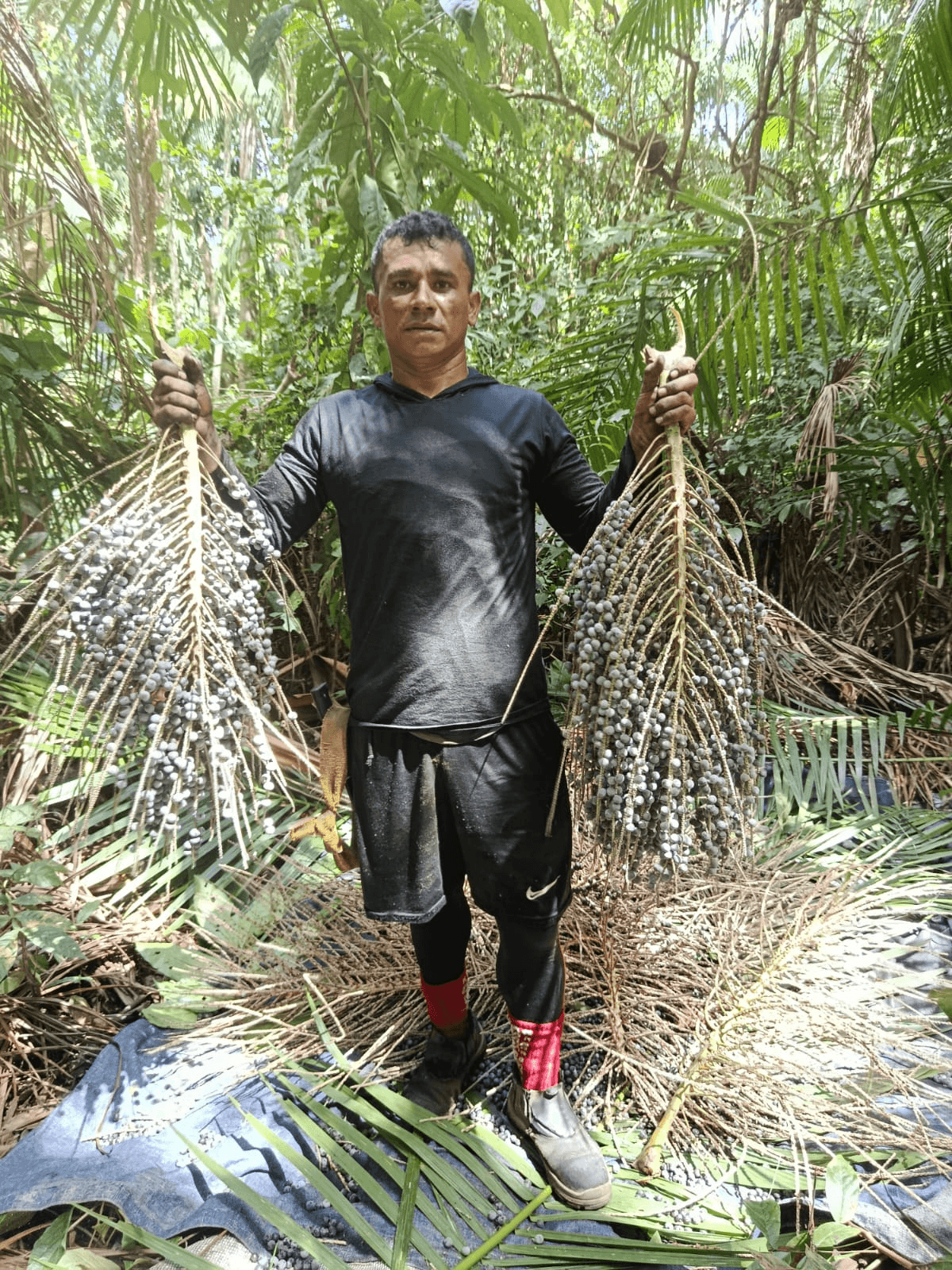
Before açaí becomes powder, capsules or a finished product, it begins as a fruit harvested among the palms of the Brazilian Amazon. These photographs show that origin as it really is.
At the Source
Açaí grows naturally throughout the Amazon region and has long been closely connected to the lives and food traditions of communities in Pará.
Our real sourcing photographs give Rose's Roots something more meaningful than a generic origin story: a direct visual connection to the place where the fruit begins its journey.
Our connection to açaí begins in Pará, in northern Brazil and the heart of the Amazon region.
Açaí is harvested in its native environment by people with direct knowledge of the land and the fruit.
These real harvest images show the beginning of the journey before açaí reaches processing and its final product formats.
The Harvest
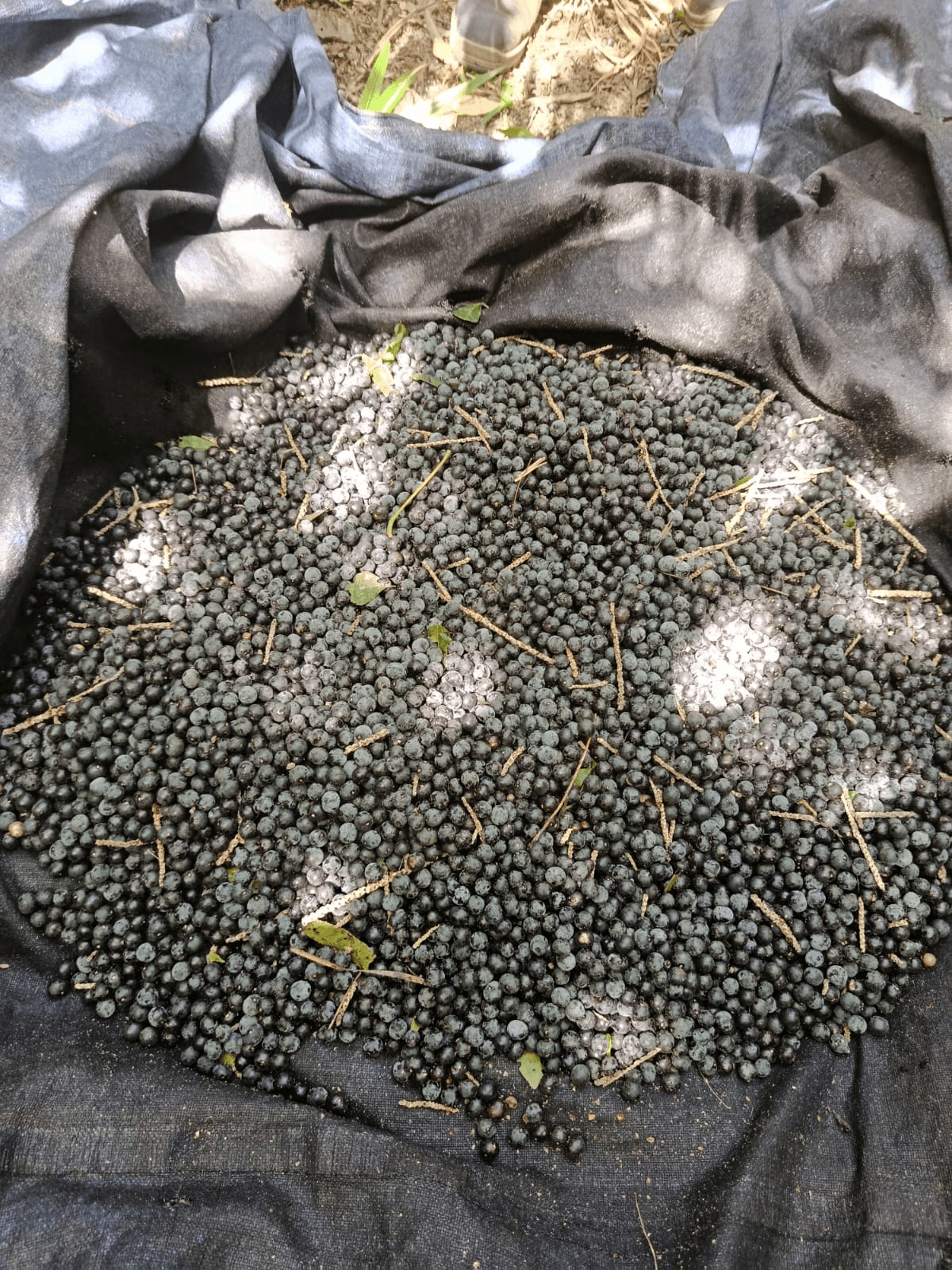
Before the deep-purple pulp familiar to consumers, açaí arrives as thousands of small berries collected from the palm. The harvested fruit is separated from its bunches before moving into the next stages of handling and processing.
Showing the fruit in this raw form helps connect the finished Rose's Roots products with their agricultural origin in Pará.
Learn More About AçaíWhy Pará?
Pará is internationally recognized as the world's leading producer of açaí. The fruit grows naturally throughout the Amazon floodplains, where local communities have harvested it for generations.
This close relationship between people, forest and tradition helped make açaí one of Brazil's most iconic foods before becoming known around the world.
Açaí naturally grows in the Amazon biome, especially across the river systems of northern Brazil.
In Pará, açaí is more than an ingredient—it is part of everyday meals, local traditions and regional identity.
Today, products made from Amazonian açaí are enjoyed in countries around the world, connecting local traditions with international consumers.
Understanding Açaí
The global açaí market connects a traditional Amazon fruit with modern food, beverage and commercial applications.
Açaí is deeply connected to northern Brazil and especially to the Amazon region, where it has long been part of local food culture.
Açaí comes from the açaí palm and is recognized for its distinctive deep-purple color, flavor and cultural importance.
Freeze-drying removes moisture at low temperatures to create a lightweight, shelf-stable and versatile product format.
Freeze-dried açaí can be incorporated into smoothies, bowls, beverages, recipes and commercial product concepts.
Journey
Every Rose's Roots product begins its journey in the Brazilian Amazon before reaching customers worldwide.
Açaí palms grow naturally throughout the Amazon region.
Fresh berries are carefully harvested in Pará.
The fruit is transformed into a practical shelf-stable format.
Powders, capsules and commercial ingredients.
Ready to reach customers around the world.

Freeze-Dried Açaí
Freeze-drying, also known as lyophilization, removes moisture from a frozen product under controlled conditions.
The process creates a dry, lightweight and shelf-stable format that is easier to store, transport and incorporate into different products and recipes.
Practical Product Format
Designed for flexible storage, transport and use across retail and commercial applications.
From Fruit to Format
The exact production process can vary, but freeze-dried açaí generally follows a path from harvested fruit to a stable final format.
Açaí berries are harvested from açaí palms in the Brazilian Amazon region.
The fruit is processed into a form suitable for further production and preservation.
Moisture is removed through lyophilization, creating a dry and practical product format.
The result can be used in powders, capsules, retail products and commercial applications.
Modern Applications
Freeze-dried açaí can support consumer products, recipes, beverages and commercial concepts across multiple markets.
Frequently Asked Questions
From its Amazonian origin to modern freeze-dried formats, these are some of the most common questions about açaí.
Açaí is a small, dark-purple fruit produced by the açaí palm and strongly associated with the Brazilian Amazon. In Pará and other parts of northern Brazil, it has long been part of everyday food culture.
Açaí is native to the Amazon region of South America. Pará, in northern Brazil, is especially known for its strong connection to açaí production, consumption and regional food traditions.
Traditional consumption in Pará can be very different from the sweet bowls popular internationally. Açaí is often enjoyed without added sugar and may be served with regional flours, fish, shrimp, charque and other savory foods.
Freeze-dried açaí is a dry format produced through lyophilization, a process that removes moisture from frozen material under controlled conditions. The resulting product is lightweight and practical for storage, transport and different applications.
Depending on the product format, freeze-dried açaí can be incorporated into smoothies, bowls, beverages, recipes, capsules and commercial food products.
No. Frozen açaí pulp retains significant moisture and must remain frozen, while freeze-dried açaí has much of its moisture removed and is offered in a dry format such as powder.
Explore Rose's Roots
Explore our freeze-dried açaí products and commercial solutions for retail, wholesale and private-label markets.
Whether you're expanding your product portfolio, developing a private-label brand or searching for a reliable wholesale partner, Rose's Roots is ready to grow with you.